Neuralink: Wiring the Mind
Read about Elon's research into mind-machine interface tech
Introduction
The device known as the N1 Implant — now branded Telepathy — is approximately the size of a large coin: 23 mm across, 8 mm deep, sealed inside a hermetic titanium shell and invisible beneath the scalp. It represents the most ambitious fusion of microfabrication and neuroscience ever attempted in a living human body.
When Noland Arbaugh rolled across a stage at Neuralink's headquarters in February 2024 and greeted the crowd with "Hello, humans," he had been paralyzed below the shoulders for eight years. Three weeks earlier, a robot had woven 64 threads into his motor cortex. He had already set a world record.
A technical breakdown of the Neuralink N1 implant showing its 1,024-electrode architecture distributed across 64 flexible polymer threads.
Hardware: Inside the Coin in Your Skull
At its core, the N1 Implant hosts 1,024 electrodes distributed across 64 flexible polymer threads — each thread one-tenth the thickness of a human hair, approximately 4–6 micrometers wide. Those threads are not metal needles. They are delicate polyimide ribbons carrying gold thin-film traces capped with iridium oxide to lower electrical impedance, making them sensitive enough to detect the whispered electrical murmur of individual neurons.
The chip at the heart of the package is a custom ASIC (application-specific integrated circuit) with 256 individually programmable amplifiers, sampling neural signals at 19,300 times per second with 10-bit resolution. It consumes roughly 6 milliwatts — less than a dim LED — and transmits data wirelessly over Bluetooth to any paired device. A wireless charging coil through the scalp keeps the battery topped up throughout the day.
Exploded view of the Neuralink Link device showing its layered construction.
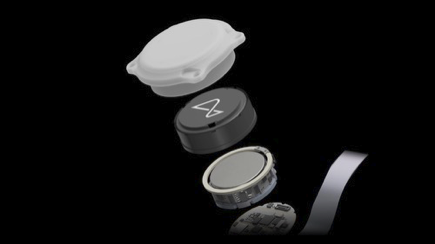
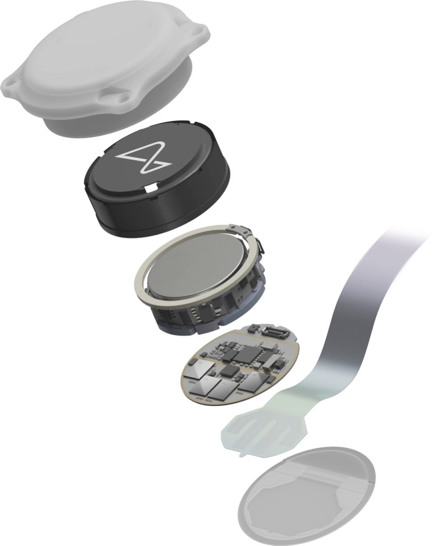
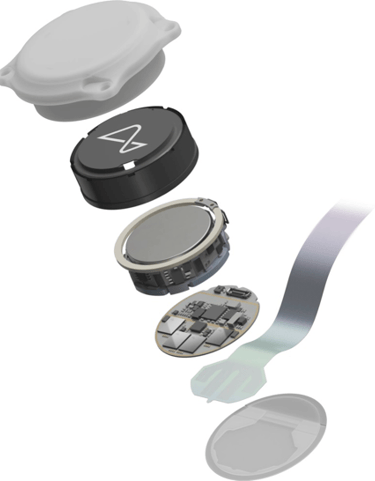
What distinguishes the N1 from its predecessors — particularly the Utah Array used by BrainGate for two decades — is its fully implanted, wireless architecture. Earlier BCIs required an external pedestal: a titanium bolt permanently affixed through the skull, creating a persistent infection risk and tethering the patient to cables. Neuralink's design eliminates the pedestal entirely. No wires exit the skull. The patient is cosmetically indistinguishable from anyone else.
"Like a Fitbit in your skull with tiny wires that go to your brain," Elon Musk said in 2021.
The R1 Robot: Surgeon Beyond Human Scale
No human hand is steady enough to place 64 threads — each thinner than a strand of silk — into living brain tissue with micron-level precision. That task falls to the R1, Neuralink's purpose-built neurosurgical robot.
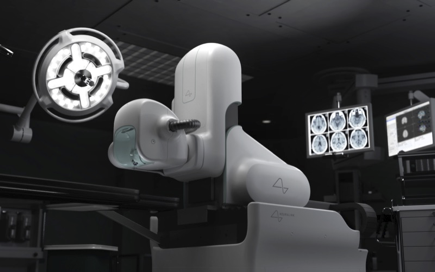
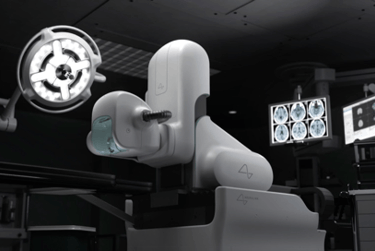
The Neuralink R1 robotic surgical system, which implants electrode threads with 10-micron precision while mapping the brain surface to avoid blood vessels.
The R1 operates on a three-axis stage with 400 × 400 × 150 mm travel and 10-micrometer resolution. Its tungsten-rhenium needle — electrochemically etched to 24 micrometers in diameter — is driven by a linear motor capable of 30,000 mm/s² retraction acceleration, allowing it to withdraw without dragging tissue. Stereoscopic cameras and six independent light modules (including UV fluorescence at 405 nm) enable submicron visual servoing, so the robot can locate and thread the 16×50 µm² loop at each thread's tip. It inserts up to six threads — 192 electrodes — per minute in automatic mode, while the surgeon retains full override capability.
Before surgery, fMRI maps the patient's precentral gyrus — the motor cortex strip that activates when they attempt to move their hands. The R1 reads this map, identifies surface vasculature to avoid, and plans insertion trajectories that maximize cortical coverage while minimizing blood-brain barrier disruption. In Neuralink's preclinical data, approximately 98% of neurons at the thread interface were preserved, with no encapsulation scar tissue observed.
Clinical Trial: The PRIME Study
In early 2022, the FDA rejected Neuralink's first application for human trials, citing concerns about electrode migration, wire movement to unintended brain areas, and the difficulty of removing the device if needed. Neuralink spent the next year addressing those objections — and on May 25, 2023, the FDA granted the Investigational Device Exemption authorizing the PRIME Study.
PRIME stands for Precise Robotically Implanted Brain-Computer Interface. Its formal clinical trial identifier — NCT06429735 — was registered on ClinicalTrials.gov on May 21, 2024, a fact that drew criticism from bioethicists, since the first human had been implanted four months earlier.
Who Qualifies
To be eligible, a participant must have quadriplegia caused by cervical spinal cord injury or ALS, with severely limited ability to use a computer, smartphone, or tablet. They must have a functional visual cortex and the cognitive ability to participate in lengthy research sessions. When recruitment opened in September 2023, roughly 1,000 people applied — fewer than 10% qualified.
Patient Zero: Noland Arbaugh
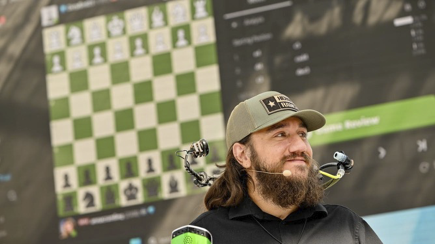
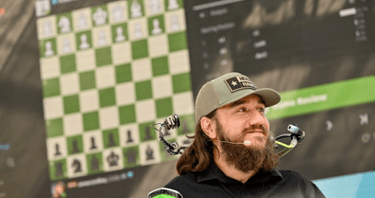
Noland Arbaugh plays online chess against Chess.com grandmaster Anna Cramling using only his thoughts — the first public demonstration of the Neuralink implant.
The Accident
Arbaugh was 22 years old in the summer of 2016, a month before his final year at Texas A&M, when a swimming accident left him with a C4-level cervical spinal cord injury. Quadriplegia. He lost all sensation and movement below the shoulders. He could not complete his degree, could not hold a phone, could not turn the pages of the books he loved. For eight years, he interacted with technology through a mouth-held stylus — a method that caused fatigue and required a caregiver nearby at all hours.
Surgery and the First Hours
On January 28, 2024, Arbaugh underwent a two-hour operation at the Barrow Neurological Institute in Phoenix, Arizona. He was discharged the following day. Neural signals were detected almost immediately after implantation.
Describing his decision to participate: "I decided that, even if it didn't work — even if something went terribly wrong — I knew that it would help someone down the road. And I knew that good or bad, they would learn something and push this technology forward."
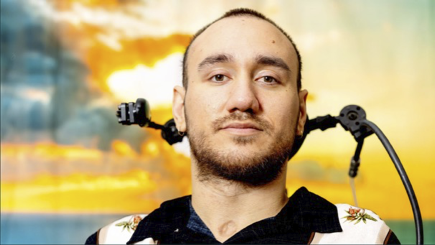
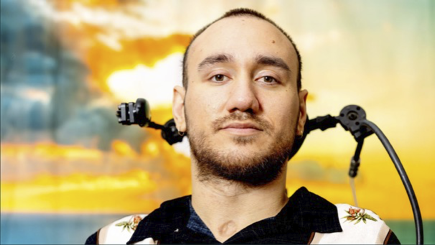
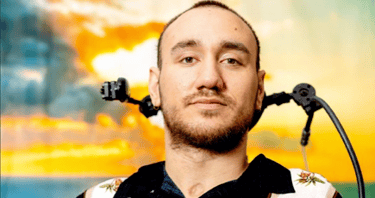
Noland Arbaugh photographed by WIRED magazine, May 2024. He uses the Neuralink device approximately 10 hours per day and has resumed college coursework.
Records, Games, and a New Life
In his very first research session, Arbaugh set a new world record for human BCI cursor control at 4.6 bits per second — surpassing the 2017 world record. He subsequently reached 8.0 BPS, more than doubling it. A typing speed of 25 words per minute followed. He played online chess. He played Sid Meier's Civilization VI for the first time since his accident. He beat his friends at Mario Kart. He ran a 72-hour livestream on X. He enrolled in college prerequisites — mathematics, philosophy, foreign languages, creative writing — at an Arizona community college. He began a professional speaking business.
"Y'all are giving me too much, it's like a luxury overload, I haven't been able to do these things in 8 years," Arbaugh said.
By August 2025, eighteen months after surgery, he was using the device ten hours per day. Asked what had changed most: "I feel like I have potential again. I guess I always have had potential, but now I'm finding a way to fulfill that potential in meaningful ways."
Key Metrics
• 1,024 electrodes per N1 implant
• 21 global PRIME trial participants (January 2026)
• 8.0 BPS: Noland's peak cursor speed — a world record
• 4,900+ combined usage hours across first 3 patients
• 0 serious adverse events reported
• $2.4B global BCI market size in 2024
Engineering Crisis: 85 Percent of the Wires Pulled Back
Weeks after Noland Arbaugh's surgery, the threads began to move. The flexible polymer fibers — having been placed with micron precision in the living tissue of his motor cortex — retracted, pulling away from the neurons they were supposed to monitor. By the time the extent of the damage was assessed, roughly 85% of the 64 threads had retracted, leaving only nine or ten in functional contact and rendering approximately 870 of 1,024 electrodes non-functional.
Arbaugh's brain, investigators found, had shifted inside his skull by up to three times what Neuralink had anticipated — a phenomenon sometimes called brain "slosh" that is poorly understood even now. The retraction reduced his cursor control performance measurably, and Arbaugh later admitted the prospect of losing the device's capabilities was "emotionally difficult."
A Known Risk
Reuters reported in May 2024, citing five anonymous sources, that thread retraction had been observed in Neuralink's prior animal studies — before the company received FDA approval. The FDA was reportedly aware of the potential. Neuralink's internal assessment had classified the risk as minor and concluded a redesign was unnecessary.
Internally, Neuralink researchers had debated solutions for years and conducted a prolonged investigation, but were unable to identify the definitive cause — though they concluded the device itself was not at fault. Possible longer-term remedies included implanting threads deeper into the brain.
The Software Fix
Neuralink's engineering team responded not with a second surgery but with an over-the-air update. They modified the recording algorithm to be more sensitive to neural population signals — local field potentials that can be measured even from retracted threads hovering near the cortical surface, rather than requiring the isolated single-unit spikes from individual neurons that only closely positioned electrodes can capture. They also improved the signal-to-cursor translation and enhanced the user interface.
The result was striking. As Neuralink stated: "These refinements produced a rapid and sustained improvement in BPS, that has now superseded Noland's initial performance." Despite operating with barely 15% of the original electrode count, Arbaugh eventually reached 8.0 BPS — more than twice the previous world record.
"Despite retraction of 85% of threads, software adaptation restored performance to exceed the initial world record. It was a lesson in resilience — human and algorithmic alike."
Alex: Zero Retraction
For the second patient, Neuralink implemented two specific surgical mitigations: reducing brain motion during implantation, and closing the gap between the implant body and the brain surface. The result was unambiguous — no thread retraction was observed in Alex. By the third patient, Brad Smith, the technique was again refined. The problem that had cost Arbaugh 870 electrodes appears to have been engineered away.
Patients Two and Three: Designing With His Brain, Speaking With His Voice
Neuralink's second and third participants did not simply demonstrate the technology worked. They showed what it could become — and who it could reach.
Alex: The Mechanic Who Became a CAD Designer
Alex — whose last name has not been made public — was an automotive technician before a car accident left him paralyzed from the neck down. He received his Neuralink implant in approximately July 2024, the second person in history to do so. On Day 2 of using the Link, he opened Fusion 360 and designed a custom mount for his Neuralink charger. It was 3D-printed and integrated into his wheelchair setup that same week.
Since then, Alex has designed graphics in Adobe Illustrator, built hardware and created advertisements for his family's business, learned to code Arduino projects, and began using his BCI to control his smartphone on the go — shopping on Facebook Marketplace while at a tire shop, choosing songs on Spotify Jam, navigating maps on bumpy roads. He was the first PRIME participant to enroll in the CONVOY Study, which explores using the Link to control a robotic arm for self-feeding and object handling. He has also flown a radio-controlled plane using only his thoughts.
"I was a very creative person before my accident. After my accident, I wasn't really able to do that... Having the BCI allows me to push the boundaries of what I can create," Alex said.
Brad Smith: Voice Returned from the Edge of Silence
Bradford G. Smith was diagnosed with ALS in 2020, after a shoulder injury from a church dodgeball game failed to heal. By the time he received his Neuralink implant in November 2024 — becoming the third patient globally and the first with ALS — he had lost movement everywhere except the corners of his mouth and his eyes. He could not speak. He required a ventilator to breathe. He could communicate only through an eye tracker that failed in sunlight, confining him indoors with the blinds drawn.
Within weeks of his implant, Smith typed his first public message on X: "I am typing this with my brain. It is my primary communication." He used ElevenLabs to create a voice clone from recordings made before his illness — so when he types now, the words come out in his own voice. He edited and published what he believes was the first video ever edited using a brain-computer interface. He attended his child's soccer game. He gave live talks at church. He used his computer outdoors for the first time.
"The most significant thing that happened this week will sound strange to you: I got to use the computer on the porch, and it worked!!" Brad Smith wrote.
Philosophy and Consciousness: Can You Upload Who You Are?
Every autumn, Elon Musk makes a statement that sounds like science fiction and circulates for weeks. At the November 2025 Tesla shareholder meeting, a shareholder asked whether the company's Optimus humanoid robot could host human consciousness. Musk answered: an approximate brain snapshot might be captured by Neuralink and instantiated inside the robot. He called it a "mind-to-robot transfer" and forecast commercial viability within twenty years.
The room applauded. Neuroscientist Miguel Nicolelis of Duke University, a pioneer in BCI research, called it "bad science fiction."
The Scale of the Gap
The current N1 Implant records from 1,024 electrodes. The human brain contains approximately 86 billion neurons and 100 trillion synaptic connections. To capture a mind — not just its motor commands, but its memories, personality, consciousness — would require biophysical fidelity orders of magnitude beyond anything that exists or is near-term plausible.
Georgia Tech neuroscientist Michael Graziano wrote: "To upload a human brain, we probably want a scanner that doesn't kill the subject, and we would need it to scan about a hundred million times as many details. That technology doesn't yet exist. The most wildly optimistic predictions place mind uploading within a few decades, but I would not be surprised if it took centuries."
The Identity Paradox
Even if the technical problem were solved, the philosophical problem remains — and may be harder. Susan Schneider, formerly NASA Chief Scientist and now director of the AI Mind Lab at Florida Atlantic University, has argued bluntly: "When you upload, you are probably dying. At best, a different person is present after you attempt to upload, one who is a psychological duplicate of you."
In a non-destructive upload — where the biological brain survives — the problem is acute. The digital copy has all your memories and thinks it is you. You are still alive and think the same. There are now two of you, and neither has a stronger claim to being the original.
The transhumanist answer is the Ship of Theseus: replace neurons with artificial components one at a time, so that continuity is never broken. But critics note this only defers the question — at what point, exactly, does biological consciousness become digital consciousness, and how would you know?
Parfit, Dennett, and What Matters
Philosopher Derek Parfit argued that what matters for personal identity is not numerical identity — being literally the same individual — but psychological continuity: the preservation of memories, beliefs, intentions, and personality. On this view, a perfect psychological duplicate is you, in the only sense that counts. Musk's stated confidence appears to rest on this Parfitian intuition.
Daniel Dennett, who died in 2024, would likely have found the very concept confused. In his heterophenomenological view, consciousness is not a unified thing that can be packaged and transferred. Neural augmentation, for Dennett, would simply mean increased computational capacity — not a mystical fusion of mind and machine, and certainly not a soul in a bottle waiting to be poured into a robot.
"When you upload, you are probably dying. At best, a different person is present — one who is a psychological duplicate of you." — Susan Schneider, AI Mind Lab
The Future of BCI: The Race to Wire Humanity
Neuralink's PRIME Study is the highest-profile project in a suddenly crowded field. The global brain-computer interface market was valued at $2.1–2.4 billion in 2024 and is projected to reach $6.5–12.4 billion by 2030, as multiple companies pursue radically different strategies for bridging brain and machine.
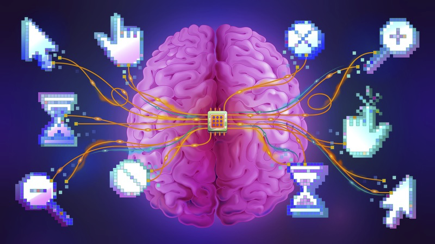
Brain-computer interface research faces a critical inflection point as clinical data from first-generation devices accumulates.
Blindsight: Vision Without Eyes
Neuralink's second device, Blindsight, targets the visual cortex. An external camera captures surroundings; the device wirelessly transmits the signal to an N1-type implant that stimulates specific neurons to produce phosphenes — points of light the brain interprets as visual images. Crucially, it bypasses damaged or absent eyes and optic nerves entirely, meaning it could restore some form of vision even to people blind from birth, as long as their visual cortex is structurally intact.
Musk described early iterations as "Atari graphics" — pixelated and low-resolution — with the expectation that resolution will improve as electrode density increases and neural adaptation occurs. He also floated the possibility of perception beyond normal human visual range: infrared, ultraviolet, or radar frequencies. On September 17, 2024, the FDA granted Blindsight Breakthrough Device Designation, accelerating its regulatory development path.
Telepathy, Telekinesis, and Beyond
In March 2025, Neuralink filed trademark applications for both "Telepathy" and "Telekinesis." The first refers to direct thought-based communication between two implanted individuals — Musk's long-articulated vision of "conceptual telepathy" in which pure ideas, not compressed into the lossy format of language, could be transmitted directly from mind to mind. The second refers to controlling physical objects with thought alone.
The CONVOY Study, in which Alex became the first participant, is already exploring thought-controlled robotic arms for self-feeding. A longer horizon includes Parkinson's disease management via closed-loop neural stimulation, seizure prevention, treatment-resistant depression, and PTSD. Locked-in syndrome and ALS communication — demonstrated by Brad Smith — are the near-term therapeutic frontier.
Ethics and Oversight: Whose Mind Is It, Anyway?
Neural data is arguably the most intimate category of information a human being can generate. It can reveal subconscious reactions before the person is consciously aware of them. It can decode intent before action. It exists before the individual can choose whether to share it. And it is, today, almost entirely unprotected by law.
The Legal Vacuum
HIPAA — the foundational US healthcare privacy law — does not cover neural data collected outside clinical settings linked to patient treatment. GDPR in Europe has no explicit neural data provision. California's SB 1223 and Connecticut's SB 1295 have extended sensitive data protections to neural information, and Colorado and Spain have enacted similar protections. Congress is considering the MIND Act, which would direct the FTC to develop a regulatory framework — its first serious attempt at neurotech governance.
Columbia neuroscientist Rafael Yuste, who co-founded the NeuroRights Foundation, surveyed consumer neurotech companies and found that nearly all had meaningful limitations on retrieving or selling neural data. He has argued for "neurorights" — protecting identity, agency, privacy, equal access, and protection from algorithmic bias — as fundamental human rights.
DOGE, the FDA, and Conflict of Interest
In February 2025, DOGE — the Department of Government Efficiency associated with Elon Musk — fired approximately 20 employees from the FDA's Office of Neurological and Physical Medicine Devices: the same office responsible for reviewing Neuralink's clinical trial applications. Public Citizen stated plainly: "Elon Musk and the so-called Department of Government Efficiency have a blatant conflict of interest because the agency's Center for Devices and Radiological Health is regulating the implantable brain-computer interface made by one of Musk's companies."
Sources stated the fired employees were not specifically targeted because of Neuralink oversight. But experts warned the firings could delay safety reviews, reduce capacity to protect trial participants, and set a precedent for regulatory capture — a charged term in an environment where brain implants are moving toward commercial scale.
Access, Equity, and Enhancement
Dr. Peter Konrad of West Virginia University's Rockefeller Neuroscience Institute said it plainly: "For every Brad Smith out there, there are hundreds of thousands of other disabled patients awaiting access to this technology." Insurance coverage and public health system access are entirely unaddressed. If enhancement applications — BCIs for healthy individuals — emerge before access is resolved, a cognitive divide between augmented and non-augmented populations becomes not science fiction but policy failure.
"If the technology works — and it appears to — the ethical question is no longer whether to build it, but who gets to have it, and on whose terms."
Conclusion: At the Edge of the Human
The question Neuralink poses is not ultimately technical. The 1,024 electrodes are a detail. The thread retraction was an engineering problem, now largely solved. The 21 participants enrolled in four countries are a milestone, not a destination. The question is what kind of species we want to become when the interface between mind and machine is no longer science fiction.
For Noland Arbaugh, lying in bed after eight years and controlling a computer with his thoughts for the first time, the philosophy is secondary. For Brad Smith, typing to his children at a soccer game, the ethics of neural data are not the first thing on his mind. For Alex, designing wheelchair mounts on Day 2, the question of identity continuity is less pressing than the question of what to build next.
That gap — between what the technology means to the people who depend on it today and the civilizational questions it poses for tomorrow — is where nearly all the hardest thinking about Neuralink has to happen. The coin-sized device in Noland's skull is not yet the harbinger of digital immortality. It is a precision instrument that returned a man to his life.
Everything after that is still being written.
"We're just now scratching the surface of the capabilities and possibilities of this thing... I think down the road, it's going to make a lot of people's lives a lot better." — Noland Arbaugh, January 2026
Read about Elon's research into mind-machine interface tech
Reach out for collaborations or questions.
aldous@gerbrot.com
© Aldous Gerbrot 2026. All rights reserved.